
Clinical Evidence
Clinical evidence is the foundation of modern healthcare. Every diagnosis, treatment plan, medication, therapy intervention, and patient care decision should...
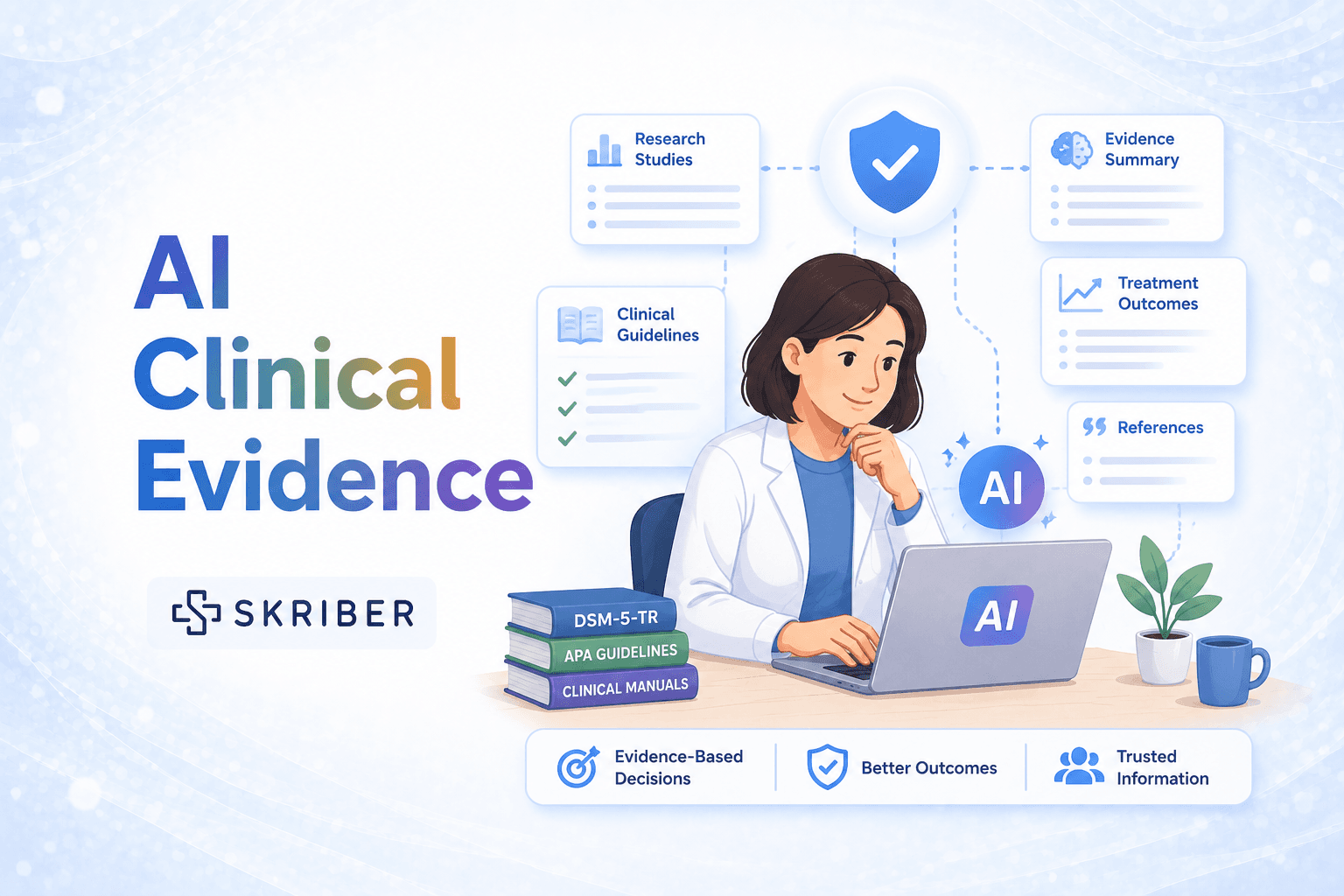
Clinical evidence is the foundation of modern healthcare. Every diagnosis, treatment plan, medication, therapy intervention, and patient care decision should be supported by reliable clinical evidence. Healthcare professionals rely on clinical evidence to determine what works, what does not work, and what provides the best outcomes for patients. As healthcare becomes more complex, providers are expected to review growing amounts of medical literature, clinical guidelines, research studies, and patient information. This creates a challenge because new evidence is published every day across thousands of journals and healthcare organizations. Keeping up with the latest clinical evidence can be difficult, especially for busy healthcare professionals who already spend significant time caring for patients and completing documentation. Artificial intelligence (AI) is changing how healthcare providers access and use clinical evidence. Modern AI tools can help clinicians find relevant evidence faster, identify treatment recommendations, and connect patient cases with trusted medical knowledge. These technologies are helping healthcare organizations improve efficiency while supporting evidence-based care.
In this blog, we will explore everything healthcare professionals need to know about clinical evidence, including its definition, importance, types, sources, challenges, and the growing role of AI. We will also introduce Skriber’s new Clinical Evidence feature and explain how it helps healthcare professionals integrate evidence directly into their documentation workflow.
What Is Clinical Evidence?
Clinical evidence refers to information gathered through scientific research, clinical studies, patient outcomes, and healthcare observations that helps medical professionals make informed decisions about patient care. The goal of clinical evidence is to support healthcare decisions using proven facts rather than assumptions, habits, or personal opinions. Clinical evidence helps clinicians understand which interventions provide the greatest benefit and which approaches may carry unnecessary risks.
Clinical evidence can come from many different sources. These include randomized controlled trials, systematic reviews, clinical practice guidelines, cohort studies, case studies, patient registries, and real-world healthcare data. Together, these sources create a body of knowledge that supports evidence-based medicine and evidence-based practice.
Healthcare professionals use clinical evidence every day. Physicians use evidence to select medications and treatment plans. Nurses use evidence to guide patient care. Therapists use evidence-based interventions to support mental health outcomes. Specialists use evidence to determine diagnostic pathways and treatment recommendations. In every healthcare setting, clinical evidence serves as a critical decision-making tool.
Why Clinical Evidence Is Important in Healthcare
Clinical evidence plays a central role in improving patient outcomes. When healthcare professionals use evidence-based approaches, patients are more likely to receive effective treatments that have been scientifically validated. One of the most important benefits of clinical evidence is consistency. Evidence helps healthcare providers follow standardized practices that reduce unnecessary variation in care. This ensures patients receive high-quality treatment regardless of where they receive healthcare services.
Clinical evidence also improves patient safety. Research helps identify treatment risks, medication side effects, and ineffective interventions. By following evidence-based recommendations, providers can reduce preventable errors and improve overall care quality.
Another major advantage is better healthcare outcomes. Evidence-based interventions are associated with improved recovery rates, better disease management, lower complication rates, and higher patient satisfaction. Organizations that prioritize evidence-based care often see stronger clinical performance metrics.
Clinical evidence also supports healthcare accountability. Insurance companies, healthcare systems, accreditation organizations, and regulatory agencies increasingly expect providers to demonstrate that care decisions are supported by evidence. Documentation that includes evidence-based rationale can strengthen clinical decision-making and improve compliance.
The Relationship Between Clinical Evidence and Evidence-Based Practice
Evidence-based practice is the process of integrating clinical evidence with professional expertise and patient preferences to make healthcare decisions. Many people mistakenly believe evidence-based practice means blindly following research studies. In reality, evidence-based practice combines three important elements.
The first element is the best available clinical evidence. This includes current research, guidelines, and scientific findings. The second element is clinical expertise. Healthcare professionals bring years of education, training, and practical experience to patient care decisions. The third element is patient values and preferences. Every patient is unique, and treatment plans should consider individual goals, circumstances, and preferences. When these three elements work together, healthcare professionals can provide personalized care that is both scientifically supported and patient-centered.
Types of Clinical Evidence
Not all clinical evidence carries the same level of reliability. Healthcare professionals often use evidence hierarchies to evaluate the strength and quality of available information.
Systematic Reviews and Meta-Analyses
Systematic reviews and meta-analyses are generally considered among the strongest forms of clinical evidence. These studies analyze findings from multiple research studies and combine the results to provide a broader understanding of a clinical question.
Because they evaluate large amounts of data, systematic reviews often provide highly reliable conclusions that can guide healthcare decisions.
Randomized Controlled Trials
Randomized controlled trials are often regarded as the gold standard of clinical research. In these studies, participants are randomly assigned to different treatment groups to evaluate outcomes.
This design helps reduce bias and provides strong evidence about the effectiveness of treatments and interventions.
Cohort Studies
Cohort studies follow groups of individuals over time to examine health outcomes and identify potential risk factors. These studies can provide valuable information about disease progression and long-term treatment effects.
Case-Control Studies
Case-control studies compare patients with a particular condition to those without the condition. Researchers examine historical data to identify factors that may contribute to disease development.
Case Reports and Case Series
Case reports describe individual patient cases, while case series examine small groups of patients. Although these studies provide lower levels of evidence, they can help identify emerging trends and rare conditions.
Clinical Practice Guidelines
Clinical practice guidelines are developed by expert organizations that review available evidence and create recommendations for healthcare providers. These guidelines help translate research findings into practical clinical recommendations.
Sources of Clinical Evidence
Healthcare professionals access clinical evidence from many different sources. Reliable evidence sources are essential for maintaining high standards of patient care.
Medical journals remain one of the most important sources of clinical evidence. Peer-reviewed publications provide access to new research findings and scientific discoveries.
Professional healthcare organizations also publish clinical practice guidelines that summarize current evidence and provide recommendations for patient care.
Government health agencies regularly release evidence-based recommendations related to disease prevention, public health, and treatment standards.
Academic institutions contribute significant amounts of clinical research that help expand medical knowledge and improve healthcare practices.
Healthcare databases such as medical literature repositories allow clinicians to search for evidence relevant to specific patient cases and clinical questions.
Challenges of Using Clinical Evidence
Although clinical evidence is essential, healthcare professionals often face challenges when trying to apply it in practice. One major challenge is information overload. Thousands of medical studies are published every year. Reviewing this information manually requires substantial time and effort. Another challenge is keeping evidence current. Medical knowledge evolves rapidly, and recommendations may change as new research becomes available.
Healthcare professionals may also encounter conflicting evidence. Different studies can produce different conclusions, making it difficult to determine the best course of action. Time constraints present another significant barrier. Providers often manage busy schedules, leaving limited time for literature reviews and evidence evaluation. Accessibility can also be an issue. Some evidence sources require subscriptions or specialized training to interpret research findings effectively. These challenges have created a growing need for technology solutions that help healthcare professionals access and apply evidence more efficiently.
The Growing Role of AI in Clinical Evidence
Artificial intelligence is becoming an important tool for managing and applying clinical evidence. AI systems can analyze large volumes of medical information much faster than humans, helping clinicians find relevant evidence more efficiently.
AI-powered tools can search research databases, identify relevant studies, summarize findings, and present information in an easy-to-understand format. This allows healthcare professionals to spend less time searching for evidence and more time focusing on patient care. Machine learning algorithms can also identify patterns within healthcare data. These insights may support diagnosis, treatment planning, and risk assessment. Natural language processing technology enables AI systems to analyze clinical notes, research articles, guidelines, and patient records. This helps connect clinical evidence directly to patient cases.
AI is not designed to replace healthcare professionals. Instead, it serves as a decision-support tool that helps clinicians access relevant evidence and make informed choices.
Benefits of AI for Clinical Evidence
AI offers several advantages for healthcare professionals working with clinical evidence.
- One significant benefit is speed. AI can review thousands of research articles within seconds, dramatically reducing the time required for evidence searches.
- Another advantage is improved efficiency. Clinicians can access relevant evidence without manually reviewing large amounts of literature.
- AI can also improve consistency by helping providers apply evidence-based recommendations across different patient populations.
- Decision support is another important benefit. AI tools can highlight relevant research findings that may otherwise be overlooked.
- Documentation quality may also improve when evidence can be linked directly to clinical notes and treatment decisions.
Healthcare organizations that successfully implement AI-supported evidence workflows often experience improvements in productivity, documentation quality, and clinical decision-making.
Clinical Evidence in Everyday Healthcare Practice
Clinical evidence is not limited to research institutions or academic hospitals. It plays a role in virtually every healthcare setting.
Primary care physicians use evidence when selecting screening tests and treatment plans.
Specialists rely on evidence to guide diagnostic evaluations and disease management strategies.
Nurses use evidence-based protocols to improve patient safety and care quality.
Therapists apply evidence-supported interventions to address mental health conditions and behavioral concerns.
Physical therapists use clinical evidence to develop rehabilitation plans and measure treatment effectiveness.
Healthcare administrators use evidence to improve organizational policies, quality improvement initiatives, and patient care processes.
In every case, clinical evidence helps support better healthcare outcomes.
The Future of Clinical Evidence
The future of clinical evidence will likely involve deeper integration between research, healthcare technology, and artificial intelligence. As medical literature continues to grow, AI-powered systems will become increasingly important for evidence retrieval and analysis. Real-time evidence support may become a standard feature within electronic health records and clinical documentation platforms. Healthcare professionals may receive automated recommendations based on patient data, current guidelines, and relevant research findings. Predictive analytics could help identify treatment options with the highest likelihood of success for individual patients. These developments have the potential to make evidence-based care more accessible, efficient, and personalized.
Clinical Evidence Examples
Here are some practical examples of AI Clinical Evidence in healthcare:
AI Finding Evidence for Depression Treatment
A therapist documents that a patient has moderate depression and anxiety symptoms.
The AI reviews the clinical note and automatically identifies evidence showing that Cognitive Behavioral Therapy (CBT) is an effective first-line treatment for mild to moderate depression. It then presents supporting research summaries and guideline recommendations alongside the note.
Example Evidence:
- CBT significantly reduces depressive symptoms.
- Combined CBT and medication may improve outcomes in some patients.
- Regular therapy sessions are associated with better long-term recovery.
AI Supporting Hypertension Management
A physician documents a patient with uncontrolled high blood pressure.
The AI analyzes the patient’s condition and surfaces evidence from current hypertension guidelines recommending:
- Lifestyle modifications
- Blood pressure monitoring
- Appropriate medication options based on patient risk factors
Example Evidence:
- Reducing sodium intake can lower blood pressure.
- Regular physical activity improves cardiovascular outcomes.
- Certain medications reduce stroke and heart disease risk.
AI Assisting Diabetes Care
A clinician records a patient with Type 2 Diabetes and elevated HbA1c levels.
The AI identifies evidence supporting:
- Weight management strategies
- Blood glucose monitoring
- Recommended medication approaches
- Dietary interventions
Example Evidence:
- Lifestyle changes improve glycemic control.
- Early intervention reduces long-term complications.
- Continuous monitoring improves treatment outcomes.
AI Supporting Physical Therapy Decisions
A physical therapist documents chronic lower back pain.
The AI retrieves evidence showing:
- Exercise therapy effectiveness
- Manual therapy recommendations
- Activity-based rehabilitation approaches
Example Evidence:
- Structured exercise programs improve function.
- Remaining active often leads to better outcomes than prolonged rest.
- Strengthening programs can reduce recurrence rates.
AI Supporting Mental Health Documentation
A therapist documents symptoms consistent with Generalized Anxiety Disorder (GAD).
The AI highlights evidence indicating:
- CBT effectiveness for anxiety disorders
- Benefits of mindfulness interventions
- Treatment duration recommendations
Example Evidence:
- CBT is highly effective for GAD.
- Mindfulness techniques can reduce anxiety symptoms.
- Early intervention improves long-term outcomes.
AI Identifying Relevant Research During Note Writing
A clinician writes:
“Patient reports chronic insomnia affecting daytime functioning.”
The AI automatically finds and presents evidence related to:
- Sleep hygiene interventions
- Cognitive Behavioral Therapy for Insomnia (CBT-I)
- Medication considerations
- Long-term management strategies
Instead of searching medical databases manually, the clinician receives relevant evidence instantly.
Introducing Skriber’s Clinical Evidence Feature
Skriber is helping healthcare professionals bridge the gap between documentation and evidence-based practice with its new Clinical Evidence feature.
Traditional clinical documentation often focuses on recording patient encounters and treatment details. However, finding supporting evidence for clinical decisions may require additional research time outside the documentation workflow.
Skriber’s Clinical Evidence feature addresses this challenge by bringing relevant clinical evidence directly into the documentation process. Instead of manually searching through multiple research sources, healthcare professionals can access evidence that supports clinical observations, treatment approaches, and care decisions while completing documentation.
This feature is designed to save time, reduce research burden, and help clinicians strengthen evidence-based decision-making.
By integrating evidence directly into the clinical workflow, Skriber helps healthcare professionals maintain focus on patient care while staying informed about relevant medical knowledge.
Key Benefits of Skriber’s Clinical Evidence Feature
Faster Access to Relevant Evidence
Healthcare professionals no longer need to spend excessive time searching through multiple resources. Relevant evidence can be identified quickly within the workflow.
Support for Evidence-Based Documentation
Clinical notes can be strengthened by connecting care decisions with supporting evidence, helping improve documentation quality and consistency.
Reduced Administrative Burden
Providers already spend significant time on documentation. Skriber helps reduce the extra effort often required to locate supporting clinical evidence.
Improved Clinical Confidence
Access to relevant evidence can help clinicians feel more confident in treatment recommendations and patient care decisions.
Better Patient Care
When evidence is easier to access and apply, healthcare professionals can focus more attention on delivering high-quality care.
Final Thoughts
Clinical evidence is one of the most important foundations of modern healthcare. It supports better decision-making, improves patient outcomes, enhances safety, and promotes consistent care across healthcare settings. As medical knowledge continues to expand, healthcare professionals face increasing challenges in finding, evaluating, and applying relevant evidence. Artificial intelligence is helping solve these challenges by making clinical evidence more accessible, efficient, and actionable. The combination of evidence-based practice and AI-powered tools represents an important step forward for healthcare. Providers can spend less time searching for information and more time focusing on patient care.
Skriber’s new Clinical Evidence feature is part of this transformation. By bringing evidence directly into the clinical documentation workflow, Skriber helps healthcare professionals strengthen evidence-based practice while reducing administrative burden. As healthcare continues to evolve, tools that combine AI with clinical evidence will play an increasingly important role in supporting better outcomes for both providers and patients.