
PIE Notes (with Examples)
Let’s be honest for a second. How do you feel when you have to sit down and write your progress notes at the end of the day? For many of us, it can feel like a chore. We might r...
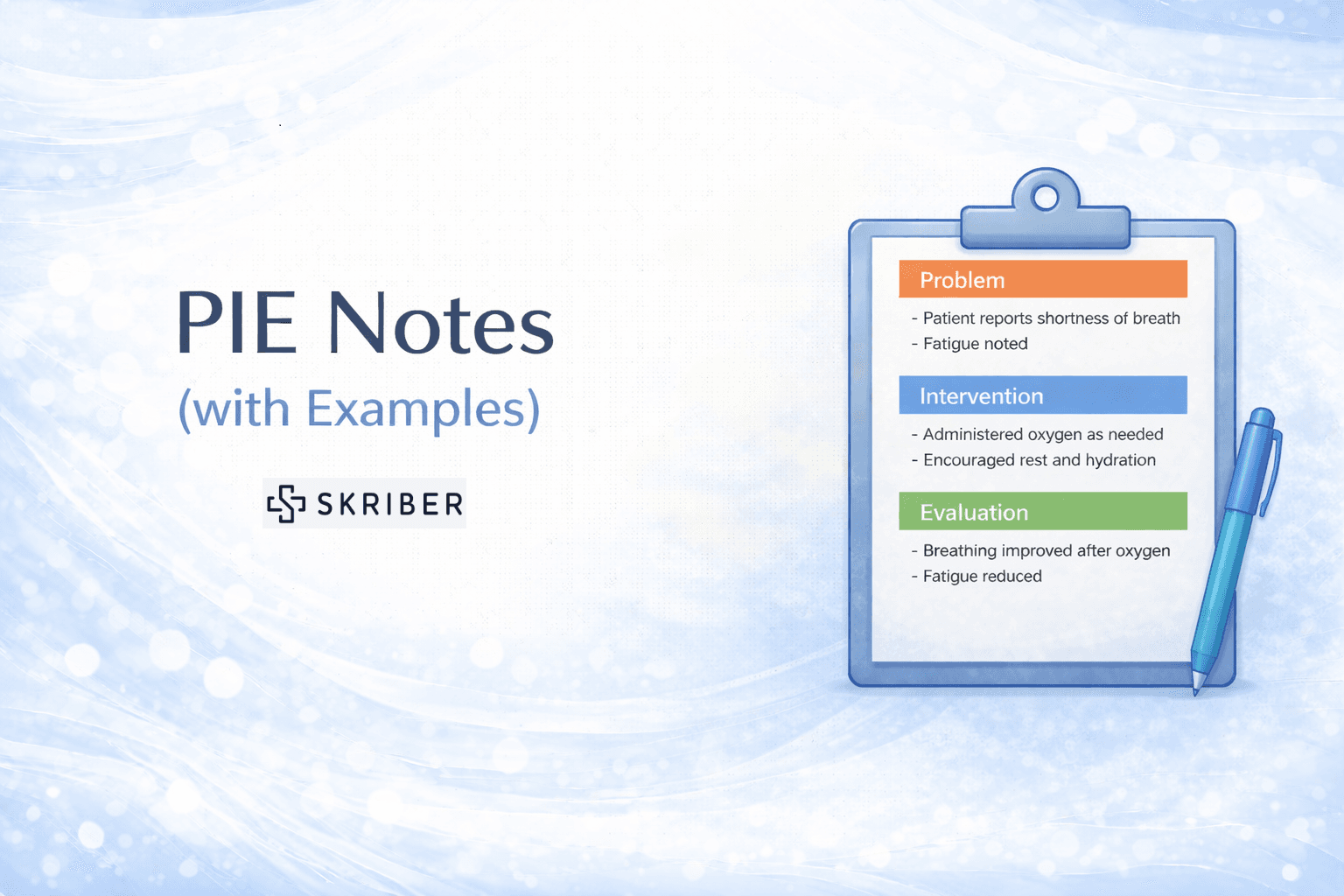
Let’s be honest for a second. How do you feel when you have to sit down and write your progress notes at the end of the day? For many of us, it can feel like a chore. We might rush through it, just trying to get the job done. We focus on checking boxes for insurance or jotting down a few words so we don't forget what happened. But what if your notes could be more than just a requirement? What if they could actually help you become a better therapist or a nurse? That’s where PIE notes come in. PIE stands for Problem, Intervention, and Evaluation. It’s a simple way to structure your notes that tells a clear and complete story about your client’s journey. Think of it like this: a SOAP note is like a medical chart, but a PIE note is like a short story chapter about your work together.
In this blog we’re going to break down PIE notes. We’ll share examples so you can start writing notes that are not only easy to write but also super helpful for your clinical work.
What is a PIE Note?
A PIE note is a way to organize your session notes into three clear parts. Each part has a specific job. When you put them together, they create a perfect snapshot of one therapy session.
Imagine you’re telling a friend about a TV show. You wouldn’t just list what happened. You’d explain the problem the character faced, what they did about it, and how it all turned out. That’s exactly what a PIE note does for a therapy session.
- The "P" (Problem): This is what the client is struggling with. It’s the reason they came to see you today. It could be a feeling, a thought, a situation, or a behavior.
- The "I" (Intervention): This is what you did as the therapist. How did you respond to the problem? What tools, techniques, or skills did you use to help?
- The "E" (Evaluation): This is the result. How did the client respond to your intervention? What’s their plan? How are they doing now compared to the start of the session?
When you use this structure, you’re not just writing notes. You are building a record of your clinical thinking. You are showing how you connect what the client needs with what you do and what the outcome is. This is the heart of good therapy.
The "P" is for Problem – What's Bringing Them In Today?
The first part of your PIE note is all about the client. Your job here is to be a good observer and a careful listener. You want to capture the main reason for the session from the client's point of view. This is not your diagnosis. It’s the here-and-now issue.
Think about what the client says and what you see. Are they feeling anxious? Did something stressful happen this week? Are they stuck in a negative thought pattern? Describe it clearly and objectively. Use words that describe what you see, not words that judge it.
For example, instead of writing "Client was dramatic about their fight with their mom," you would write, "Client reported feeling very upset after an argument with their mother." See the difference? The second one is a fact. The first one is your opinion.
Also, remember to include both how the client feels and how they act. This is the difference between their internal experience and their external behavior.
- Good Example for "P": "Client presented to session looking tired and with slumped posture. Client stated the main problem this week was overwhelming anxiety about an upcoming work presentation. Client reported difficulty sleeping and a lack of appetite due to this worry. Client also shared they have been avoiding checking work emails."
This "P" section tells you everything you need to know. It sets the stage for the rest of the note. It’s specific, objective, and focused on the client's experience.
The "I" is for Intervention – This is Where You Shine
Now we get to your part of the story. The "Intervention" section is where you document what you did in the session to address the problem. This is so important. It shows that you are an active and thoughtful professional. It’s your chance to show your work.
Don't be shy here. Be specific about the techniques you used. Did you teach a breathing exercise? Did you use a specific type of question from Cognitive Behavioral Therapy (CBT)? Did you just listen quietly and offer support? All of these are interventions. Even just being present and listening is a valid and important intervention, especially if the client needed to feel heard.
The key is to connect your intervention back to the problem. If the problem was anxiety about a work presentation, your intervention should be something that helps with that specific issue. For example:
- Problem: Client is anxious about a work presentation.
- Possible Interventions:
- Led client through a 5-minute guided grounding exercise to manage acute anxiety in the moment.
- Used CBT techniques to help client identify and challenge the thought, "I am going to fail and everyone will laugh at me."
- Collaboratively created a step-by-step plan with the client for preparing for the presentation to reduce feelings of being overwhelmed.
See how each intervention is a direct response to the problem? This is what makes a PIE note so powerful. It shows the connection between the client's needs and your clinical skills.
- Good Example for "I": "Therapist normalized client's feelings of anxiety related to public speaking. Therapist then provided psychoeducation on the connection between thoughts, feelings, and behaviors. Using a Socratic questioning style, therapist guided client to examine the evidence for and against their fear of failure. Therapist and client then practiced a brief diaphragmatic breathing technique to use when anxiety spikes."
The "E" is for Evaluation – How Did It Go?
The final piece of the puzzle is the "Evaluation." This section answers the question: "So what?" What was the result of your work together in this session? How is the client doing now?
This is not about judging if you did a "good" or "bad" job. It’s about objectively observing the client's response. Did the anxiety go down after the breathing exercise? Did the client seem to have a new understanding of their thoughts? What is their plan for the week?
The evaluation should also include the client's plan moving forward. This connects this session to the next one. It creates a sense of continuity.
Also, use this section to state your own clinical impression. Based on everything that happened, how is the client progressing toward their overall goals? Are they stable, improving, or struggling?
- Good Example for "E": "Client reported feeling noticeably calmer after practicing the breathing technique, rating their anxiety as a 4 out of 10, down from an 8 at the start of session. Client was able to identify the thought 'I will fail' as an unhelpful thinking pattern. Client agreed to practice the breathing technique twice daily and to write down any anxious thoughts that arise before the presentation. Clinician assesses client as making progress in developing coping skills, though anxiety around the presentation remains high."
This "E" section closes the loop. It shows the immediate outcome of the session and sets the direction for the future.
PIE Note Examples
Sometimes the best way to learn is to see it in action. Let’s look at a couple of full PIE note examples for different clients. Notice how each part flows smoothly into the next.
Scenario A: Client with Depression
- P (Problem): Client arrived 10 minutes late, stating they "almost didn't come." Client reported persistent low mood, low energy, and lack of motivation to complete basic tasks like showering and grocery shopping this past week. Client expressed feelings of hopelessness, stating, "What's the point? Nothing ever gets better."
- I (Intervention): Therapist warmly welcomed client and validated the effort it took to attend the session. Therapist used motivational interviewing to explore the discrepancy between the client's values (e.g., wanting to feel healthy) and their current behavior (e.g., not showering). Therapist assisted client in breaking down the task of "grocery shopping" into smaller, more manageable steps, such as first just making a list.
- E (Evaluation): Client became slightly more engaged when discussing their personal values. Client was able to create a short grocery list during the session and stated, "Maybe I can just try to go for 10 minutes." Client agreed to attempt one small task from the list before the next session. Clinician notes a slight increase in client's motivation by the end of the session, though depressive symptoms remain severe.
Scenario B: Client with Relationship Conflict
- P (Problem): Client reported a significant argument with their partner over the weekend. Client stated they felt "blindsided" by the partner's criticism and responded by yelling and then leaving the house. Client reported still feeling angry and hurt, and unsure how to move forward.
- I (Intervention): Therapist provided a calm and non-judgmental space for client to vent their feelings. Therapist then introduced the concept of "I feel" statements as a communication tool. Therapist and client role-played the conflict situation, with the therapist modeling how to express feelings without blaming the partner (e.g., "I feel hurt when I hear criticism" instead of "You always attack me").
- E (Evaluation): Client responded well to the role-play, stating it felt "awkward but helpful." Client expressed a willingness to try using an "I feel" statement when discussing the conflict with their partner later this week. Client reported feeling less angry and more hopeful about resolving the issue. Client will report back on the outcome of this conversation at the next session.
Common Mistakes to Avoid (And How to Fix Them)
Even with a simple structure, it’s easy to fall into some common traps. Let’s look at a few so you can avoid them in your own notes.
Mistake #1: The Vague Note. This is when your note is so general it could apply to almost any client.
- Bad Example: "Client discussed feelings. Therapist listened. Client felt better."
- Why it's a problem: It doesn’t tell you anything specific. What feelings? What did the therapist do besides listen? How much better?
- How to fix it: Get specific! Name the feelings, name the intervention, and use a scale (like a 1-10 rating) for the evaluation.
- Better Example: "Client discussed feelings of sadness related to a job rejection. Therapist used reflective listening and validation. Client reported a decrease in sadness from an 8/10 to a 5/10 by the end of the session."
Mistake #2: The Judgmental Note. This is when you use words that sound like you are blaming the client.
- Bad Example: "Client was resistant and refused to do the homework."
- Why it's a problem: "Resistant" and "refused" are negative labels. They don't explain what happened.
- How to fix it: Describe the behavior objectively.
- Better Example: "Client stated they did not complete the agreed-upon homework assignment. Client reported feeling too overwhelmed during the week to practice the breathing exercise." This describes the situation without judgment.
Mistake #3: The "Nothing Happened" Note. This is when you forget to include the intervention.
- Bad Example: "Client talked about work stress. Client is still stressed."
- Why it's a problem: It sounds like you just sat there. Where is your clinical work?
- How to fix it: Add what you did in response.
- Better Example: "Client talked about work stress. Therapist assisted client in identifying specific stressors and prioritizing tasks to manage workload. Client reported feeling a bit more in control after making a plan."
Conclusion:
So, there you have it. PIE notes are a straightforward and powerful way to document your clinical work. They help you move from just writing down facts to telling a coherent story about your client's progress. By separating the session into Problem, Intervention, and Evaluation, you create a note that is useful for you, for your client, and for anyone else who needs to understand the treatment.
Start simple. Don’t try to write a perfect novel. Just focus on getting those three parts down for every session. Ask yourself: What was the main issue? What did I do about it? How did it go? With a little practice, PIE notes will become a natural part of your routine. They will save you time, improve your clinical focus, and give you a beautiful record of the important work you do every day. Now go forth and write some great notes! You’ve got this.