
History Taking
As a clinician with years of experience, I can tell you that the most powerful tool I own is not a fancy machine or a sharp scalpel. It is a simple, ancient skill: asking questi...
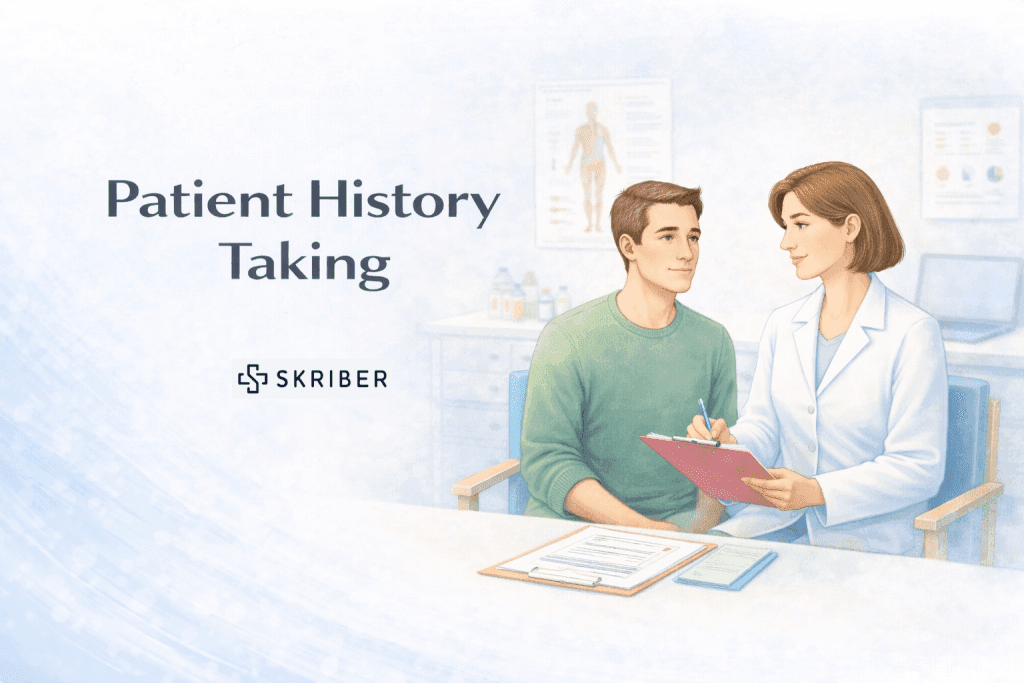
As a clinician with years of experience, I can tell you that the most powerful tool I own is not a fancy machine or a sharp scalpel. It is a simple, ancient skill: asking questions. We call this process “history taking.” It’s the art of listening to your patient’s story. A good history can give you a diagnosis more often than any blood test. It builds trust. It shows your patient that you see them as a person, not just a set of symptoms. This guide is for every clinician, from a new student to a seasoned doctor. Let’s learn how to truly hear the story.
The Setup: Creating a Safe Space
Before you ask a single question, look at the room. Is it private? Can someone outside hear you? Your patient needs to feel safe to share personal details. Close the door. Pull the curtain. Sit down. If you stand over them, you create a power gap. If you sit at their level, you build a bridge.
Introduce yourself clearly. Say your name and your role. “Good morning, my name is Alex, and I am the nurse practitioner who will be with you today.” A simple smile helps. Ask them how they prefer to be addressed. Using their name shows respect from the very first moment. This first minute sets the tone for the entire visit.
Remember, you are a guest in their story. They may be nervous, in pain, or worried. Your calm presence is the first medicine you offer. So, take a breath, be present, and let’s begin.
The Chief Complaint (Why Are You Here?)
This is the reason for the visit. It is the headline of their story. You want to know, in their own words, what brought them in today. Do not use medical words here. Let them speak.
You can start with a simple, open-ended question: “What brings you in today?” or “What can I help you with?” Sometimes they will hand you a list. Sometimes they will say, “It’s my back.” Listen to the exact words they use. Your job is to write that down in their words, inside quotation marks. For example: Chief Complaint: “My chest feels tight.”
If they mention multiple issues, write them all down. But try to find out which one is the most pressing today. Ask, “Of all the things you are dealing with, what is bothering you the most right now?” This helps you focus your thinking from the start.
The History of Present Illness (Tell Me the Story)
This is the heart of the history. Now you need to get the details of the main problem. We use a simple memory tool to help us get all the facts. Think of it as the “who, what, when, where, and why” of a symptom. A common way to remember is by using the acronym OLDCARTS.
Let’s break that down:
- O is for Onset: When did this start? Did it come on suddenly like a lightning bolt, or slowly like a sunrise? “Did it start yesterday, or has it been coming on for a week?”
- L is for Location: Where is it? Can you point to it with one finger? Does it move around?
- D is for Duration: How long does it last? Does it come and go, or is it constant? “Does it last for a few seconds or for hours?”
- C is for Character: What does it feel like? This is where you let them use their own words. Is it sharp, dull, burning, throbbing, or like an elephant sitting on them?
- A is for Aggravating factors: What makes it worse? “Does it hurt more when you walk, eat, or lie down?”
- R is for Relieving factors: What makes it better? “Does resting help? Have you taken any medicine for it?”
- T is for Timing: Is there a pattern? Does it happen in the morning, or only at night after you eat?
- S is for Severity: On a scale of 0 to 10, with 0 being no pain and 10 being the worst pain of your life, what number is it now? What was it at its worst?
As you ask these, listen for the flow of the story. Let them talk. If they jump around, gently guide them back. Your goal is to create a timeline. What were they doing when it started? What happened next? You are building a movie of their illness in your mind.
The Past Medical History (The Backstory)
Now we shift from the current problem to their overall health background. This is important because past problems can cause new ones. A person with a history of heart problems who feels chest tightness is a very different story than a young athlete with no past issues.
Start with the big ones. Ask about chronic illnesses. “Have you ever been told you have high blood pressure, diabetes, asthma, or heart disease?” Ask about surgeries. “Have you ever had an operation?” Ask about hospitalizations. “Have you ever been in the hospital overnight?” Also, ask about injuries or major illnesses from the past.
Do not forget about allergies. This is a safety step. “Are you allergic to any medications, foods, or latex?” If they say yes, ask what reaction they had. A rash is different from trouble breathing. Write down the allergy and the reaction clearly. This simple step can save a life.
Medications and Allergies (The Daily Tools)
You need to know exactly what they are taking. This includes prescriptions, over-the-counter pills, vitamins, and herbal supplements. People often do not think of a vitamin as a “medicine,” but it is important. Sometimes, a problem is caused by a new medicine.
Ask to see their bottles. If they do not have them, ask them to list them. “What do you take in the morning? What do you take at night?” Write down the name, the strength (like 500 mg), how much they take, and how often. For example: Lisinopril 10 mg, one tablet by mouth every morning.
Also, ask about their immunizations. “When was your last tetanus shot? Have you had your flu shot this year?” This is not just about the current problem; it is about keeping them healthy for the future.
Social History (Their World)
This is my favorite part. This is where you learn who the person is outside of the clinic. A person’s health is deeply tied to their life. Where they live, what they do for work, and who they spend time with all matter.
Ask about their job. “What do you do for a living?” A construction worker with back pain has different needs than an office worker. Ask about their home life. “Who lives at home with you?” This tells you about their support system. Ask about habits. “Do you use tobacco, alcohol, or any other substances?” Ask this in a kind, non-judgmental way. It is not about judging; it is about understanding risk.
Also, ask about their daily life. “What do you enjoy doing? What are your goals?” Understanding their life helps you create a treatment plan that will actually fit into their world. A plan that ignores their reality is a plan that will fail.
Family History (The Genetic Gift)
We are all a mix of our parents and siblings. Some health conditions run in families. Knowing your patient’s family history helps you see what risks they might carry. It helps you know what to watch for in the future.
Ask about the health of their blood relatives. “Are your parents alive?” If not, “What did they pass away from?” Ask about siblings and children. “Does anyone in your family have heart disease, cancer, diabetes, or stroke?” You are looking for patterns.
If a patient says, “My father had a heart attack at 45,” that is a very important piece of information. It does not mean the patient will have a heart attack, but it tells you that you should pay close attention to their heart health. It guides your thinking.
Review of Systems (The Final Sweep)
Now that you know the main story and the background, you do a quick sweep of the rest of the body. This is called the “Review of Systems.” The goal is to make sure you did not miss anything. Sometimes, a patient forgets to mention a small symptom that is actually a big clue.
You go from head to toe, asking simple yes-or-no questions. You are not doing a physical exam yet; you are just asking.
- General: “Any fever, chills, or recent weight loss?”
- Head: “Any headaches or dizziness?”
- Eyes: “Any vision changes?”
- Chest: “Any cough or shortness of breath?”
- Heart: “Any racing or fluttering in your chest?”
- Belly: “Any nausea, vomiting, diarrhea, or constipation?”
- Urinary: “Any pain when you pee?”
- Muscles: “Any joint pain or swelling?”
- Skin: “Any new rashes or sores?”
You do not need to ask every single question for every patient. You focus more on the areas related to their main complaint. But doing a quick check helps you be thorough. It ensures that the story you have is complete.
Special Formats for Different Clinicians
Not every clinician uses the exact same format. The structure changes a little based on your role. The core ideas, listening and being thorough, stay the same. Here is how different clinicians might shape their history.
For the Primary Care Clinician (The Long-Term Partner)
If you are a primary care doctor, nurse practitioner, or physician assistant, you are the main hub. Your history is the most complete. You have the gift of time and continuity. You are not just treating one problem; you are managing a person’s health over years.
Your format is a complete database. You will use all the steps we discussed, Chief Complaint, HPI, Past Medical, Meds, Social, Family, and Review of Systems. You will also include a Health Maintenance section. This means asking about screening tests like mammograms, colonoscopies, and when their last check-up was. Your history is the foundation of their entire medical record. It is detailed, organized, and grows with the patient over time.
For the Emergency Room Clinician (The Rapid Detective)
The emergency room is different. You have little time, and the stakes are high. Your history format is fast and focused. You are looking for one thing: Is this a threat to life or limb?
Your chief complaint is urgent. Your HPI is rapid but sharp. You use OLDCARTS quickly. Your Past Medical History focuses on what could kill them: heart disease, diabetes, bleeding disorders, and their exact medication list.
You also have a crucial section called “Events Leading to Arrival.” You need to know the exact timeline of what happened in the hours before they walked in. “What were you doing at 2:00 PM? What happened at 4:00 PM? When did you decide to come in?” Your history is like a crime scene investigation. It is fast, direct, and designed to help you make a split-second decision.
For the Mental Health Clinician (The Emotional Explorer)
For a psychiatrist, psychologist, or therapist, the history is about the mind and the soul. The chief complaint is often an emotion or a behavior. “I feel sad,” or “My partner says I am angry all the time.”
Your format includes all the medical basics, but it dives deeper into the Social History. You explore their childhood, their relationships, their trauma history, and their coping skills. You use a Psychiatric Review of Systems. This includes questions about mood, sleep, appetite, energy, concentration, thoughts of self-harm, and hallucinations.
You also ask about Functional Status. “How are you doing with work? How are your relationships?” Your goal is to understand their inner world. The history you take is a journey into their lived experience. It requires immense patience, empathy, and a commitment to creating a space where a person feels safe enough to be vulnerable.
For the Student Clinician (The Learner’s Path)
If you are a student, medical, nursing, PA, or any other field, your history format is the most detailed. Your teachers want to see that you know the entire structure. You will likely be asked to write a full history and physical.
Your format will be long and thorough. You will include every single element we discussed, and you will write it in a specific, formal order. You will likely write a paragraph for the HPI, a list for the past medical history, and a detailed review of systems.
The goal for a student is not speed. It is completeness. You are building a habit. You are training your brain to never miss a step. It might feel tedious now, but this thoroughness will become second nature. It will make you a safer, more thoughtful clinician in the future. Do not skip the “boring” parts. Every detail matters when you are learning.
Final Words of Wisdom
I have shared the formats and the questions. But the secret to great history taking is not the paper form. It is you. It is how you listen. There is a difference between “hearing” and “listening.” Hearing is passive. Listening is active.
When a patient is talking, do not interrupt. I know we are all busy. I know there is pressure to move fast. But the first few minutes of listening can save you thirty minutes of confusion later. When you interrupt, the patient feels unheard. They will often stop sharing key information.
Use simple words. Do not say, “Are you experiencing dyspnea?” Say, “Are you having trouble catching your breath?” Do not say, “Are you febrile?” Say, “Do you feel feverish?” We are not trying to sound smart. We are trying to understand.
Finally, show empathy. If a patient tells you something hard, acknowledge it. “That sounds very difficult to go through.” You do not need to have a solution for their pain. You just need to acknowledge it. This simple act builds trust. And trust is the foundation of healing.
So, as you go forward, remember: your patient is the expert on their own body and life. Your job is to be the expert at asking questions and listening to the answers. Take a good history, and you will be a good clinician. Take a great history, listening with your full attention, and you will become a healer. Now, go listen to some stories.